 3D character
Guide · 6 min read
Shape language in character design
Plan silhouettes that read at gameplay distance, stay recognizable across variants, and give the 3D team a clear target to build.
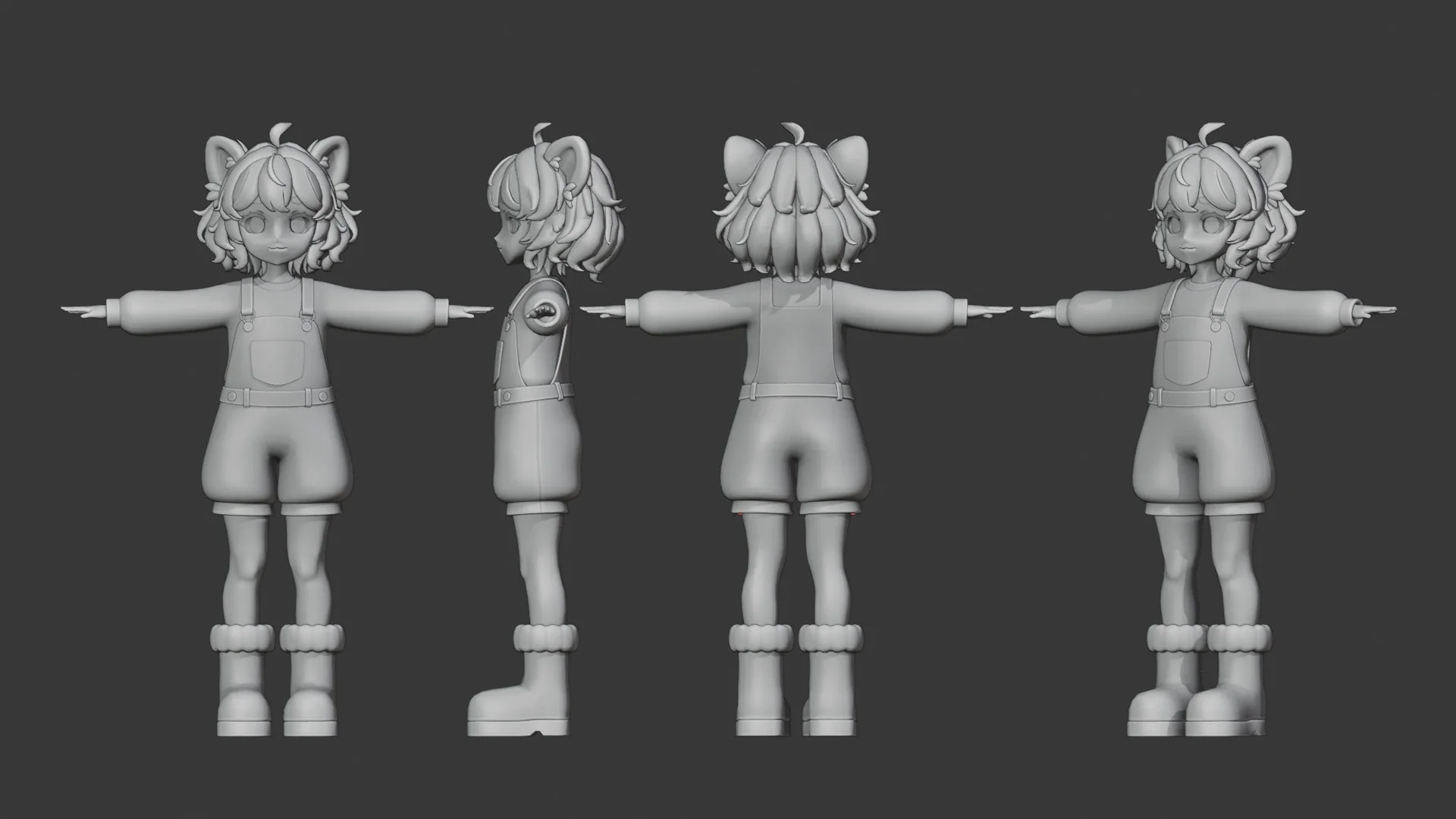
What shape language does
Shape language is the pattern of forms a player notices first. A large head and short limbs read differently from a narrow torso and long limbs. The dominant shapes give the character its identity; the smaller shapes in hair, clothing and accessories carry that identity into close-up views.
Round forms read as friendly and approachable, squares as stable and strong, triangles as dynamic or dangerous. Real characters mix them. What matters is which one leads and how the others support it.
Read the silhouette at camera distance
Place the front and three-quarter views against a plain background at the size the character will occupy in play. Check whether the head, hands and main prop read separately. Then look at a second pose. If hair and shoulders merge, change the volume or the space between them before anyone spends time on surface detail.
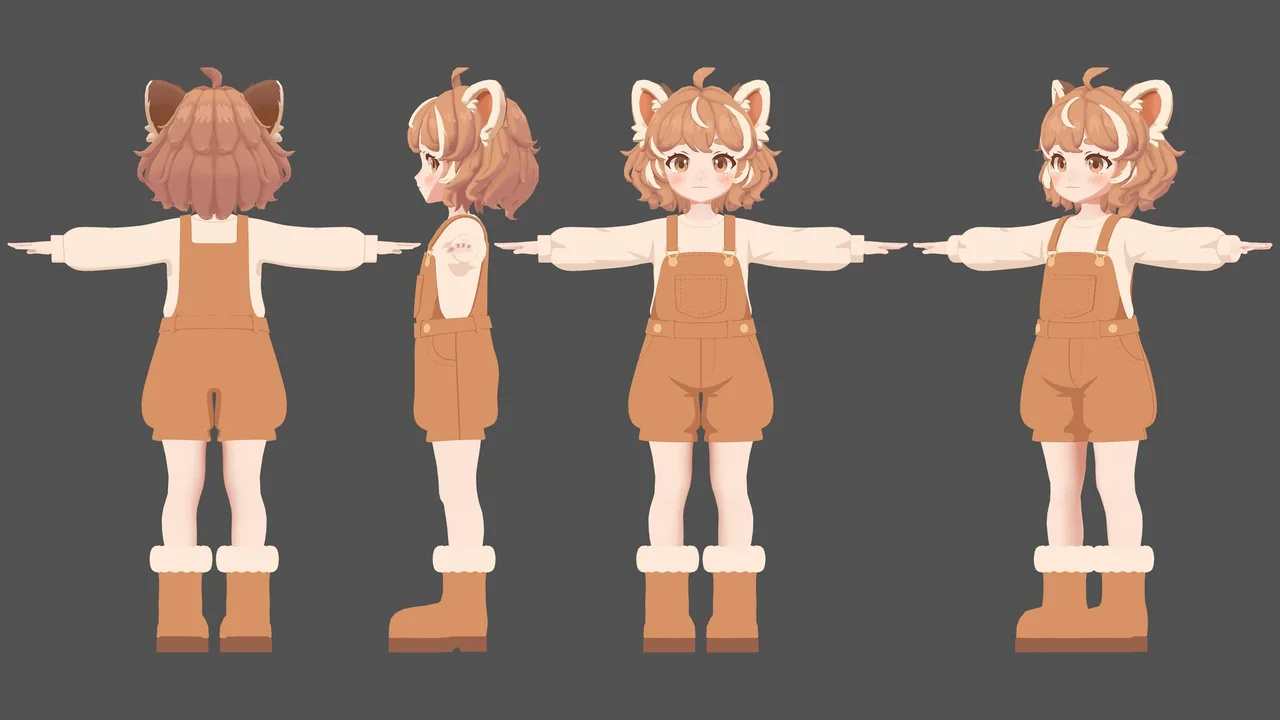
On NumiNumi, the clay turnaround makes it possible to review those shapes without relying on textures. The textured pass then confirms that the palette supports the forms instead of rescuing them.
Keep anchors across variants
For a family of characters or a wardrobe set, choose a few anchors to protect: face proportions, the head-to-body ratio, the outer shape of ears or tail. Give each variant room to change shape and colour around those anchors. Place variants side by side, under the same lighting and at the same scale, to spot drift early.
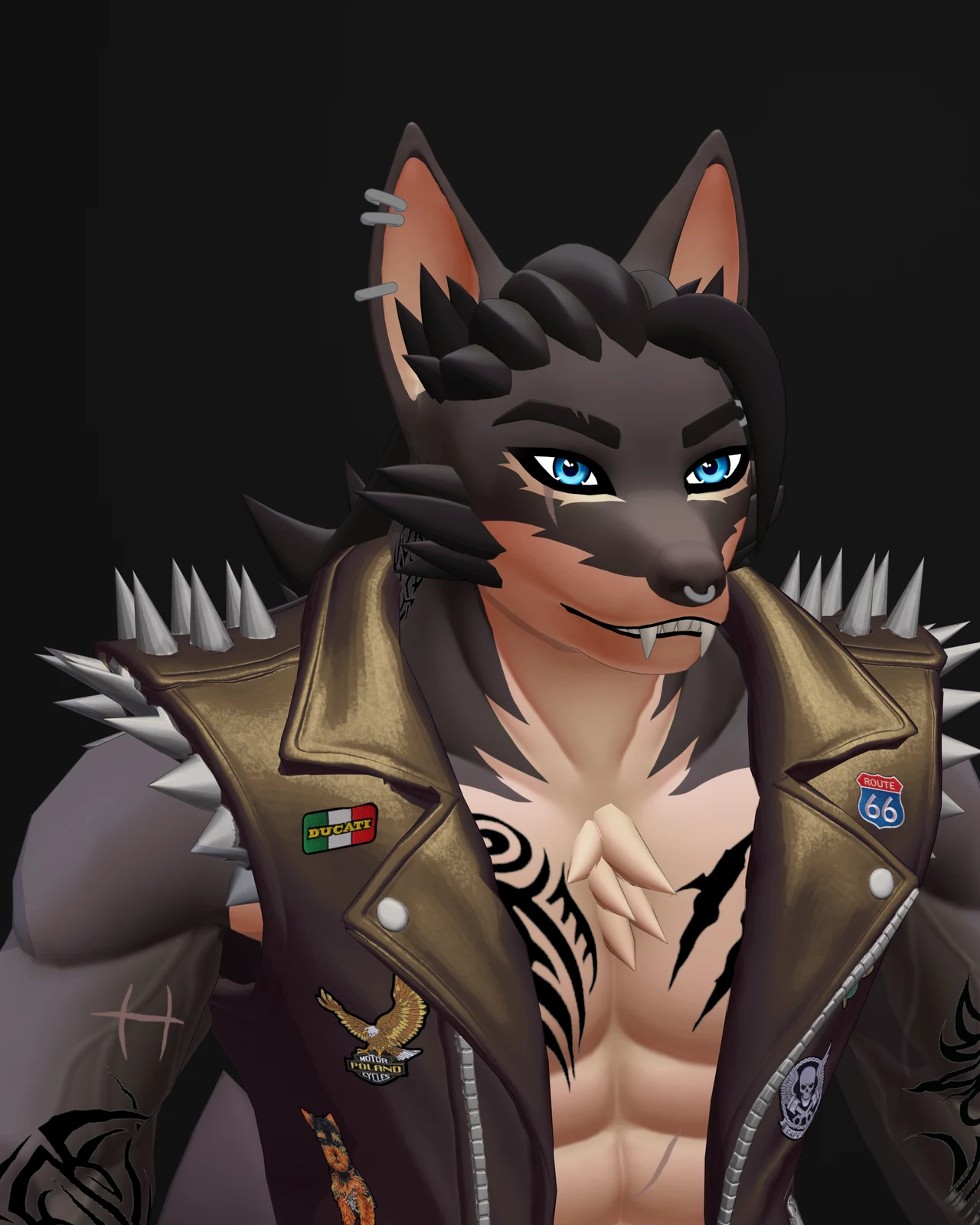
Brutus and Rocco show the idea at character scale: one base mesh, two personalities. The anchors stay; the silhouette changes through clothing, tattoos and pose.
Shapes that survive deformation
A silhouette that works in a T-pose can collapse in motion. Review the key poses the character must support (run, attack, idle, emote) and check that the defining shapes still read. Plan topology around the forms that carry identity, so the rig bends them without losing them.
A useful review pass: the clay model in three gameplay poses, at in-game size, next to the concept. If the character is still recognizable, the shapes are doing their job.
Put the decisions in the brief
- The expected camera distances, hero views and poses the character must support.
- Which shapes carry the identity, and where modeling may adjust proportions for deformation.
- Wardrobe or body variants, and the views you want to compare at review.
- The target engine, platform and asset budgets, agreed before final surfaces.
Those four points let a 3D team quote accurately and let you approve the model before texture and rig work begin. Share your brief and we will tell you what we would protect first.
