 3D character
Guide · 8 min read
How much does a custom 3D VTuber model cost?
Public price lists put a custom 3D VTuber model anywhere from about US$300 to more than US$10,000, and five things decide where yours lands: the face, the toggles and outfits, the app formats, the rights and the timeline.
The short answer
A custom 3D VTuber model costs from a few hundred US dollars at the low end to US$3,000–10,000 and more for professional work. Here is what public listings and studio price pages showed in November 2026:
| Who sells it | Published price | What that price includes |
|---|---|---|
| Marketplace gigs | US$10–450, median about US$70 | A sample of 46 Fiverr listings from August 2026. (VTubeMe) |
| Solo artist on VGen | US$300–600 | One artist’s tiers: a VRM file and rigging, with the 52 ARKit shapes included from the US$500 tier and commercial use in every tier. (Xoiker) |
| Independent artists with Carrd pages | From US$1,400; from US$3,000 | ARKit +US$150 and six to eight weeks; ARKit +US$250, delivered as VRM and .warudo. (Yosua’s Carrd page, Ke Mao’s Carrd page) |
| Small studio | US$900–7,000 | Four tiers: 30 blend shapes at US$2,500, the 52 ARKit set with a commercial and merchandise licence at US$4,500, full IP transfer at US$7,000. (AnimArts) |
| Market guide | US$800–2,500 typical; US$3,000–10,000+ professional | A 2026 summary of the commission market. (Dere★Project) |
Prices as published on each page in November 2026. Listings change often, so check the page before you compare.
Read the table as five different products, not five prices for one product. A model from a template, a custom model from a solo artist and a studio model with a full rights transfer all answer to “custom 3D VTuber model”, and they are not the same purchase.
Why the range is so wide
A US$300 model and a US$7,000 model can share a name and still differ in everything an audience notices after the first week of streams: how many expressions the face can make, whether tracking maps without manual setup, how the hair and clothing move, how many outfits there are, and who owns the result.
The AnimArts price table makes the steps visible. Its US$2,500 tier carries 30 blend shapes, 2K textures, two outfits and a commercial streaming licence. The US$4,500 tier adds the full 52 ARKit set, 4K textures, a third outfit, more toggles and hand poses, and a licence that covers content and merchandise. The US$7,000 tier adds finger rigging, an outfit builder, levels of detail, full IP transfer and unlimited revisions.
Every step adds work you can name. That is the useful way to read any price: not “is it expensive”, but “what is on the list”.
Where the money goes
A custom 3D VTuber model goes through the same production as a game character: design alignment, modeling, textures, a body rig with physics, the facial system, and setup in your streaming app. Our guide to how a 3D game character is made walks through those stages one by one.
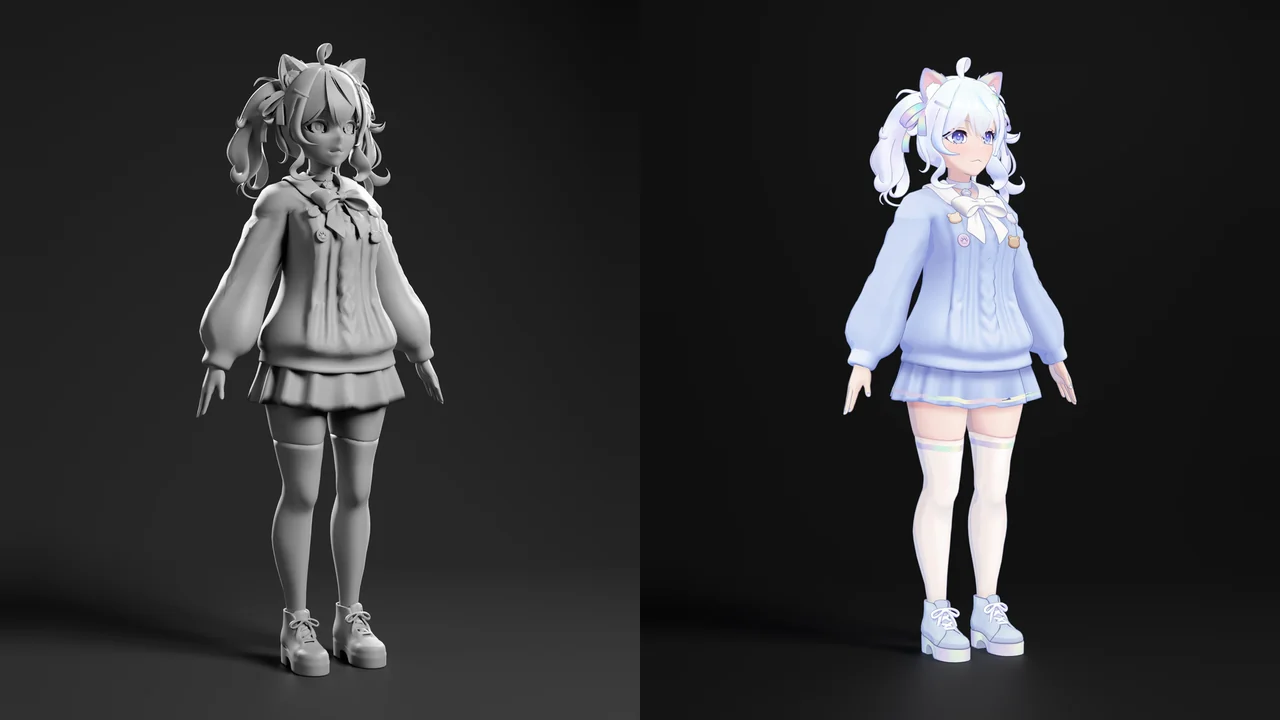
At the very bottom of the market, the model is not commissioned at all. VRoid Studio is free if you build the character yourself, as the VTubeMe price guide notes. Above that, a lower price usually means a shorter list: fewer shapes on the face, one outfit, one app format, personal-use rights. A higher price means each stage is done for your character alone, tested in your app, and delivered with the source files and the rights you need.
What moves the price
The facial system
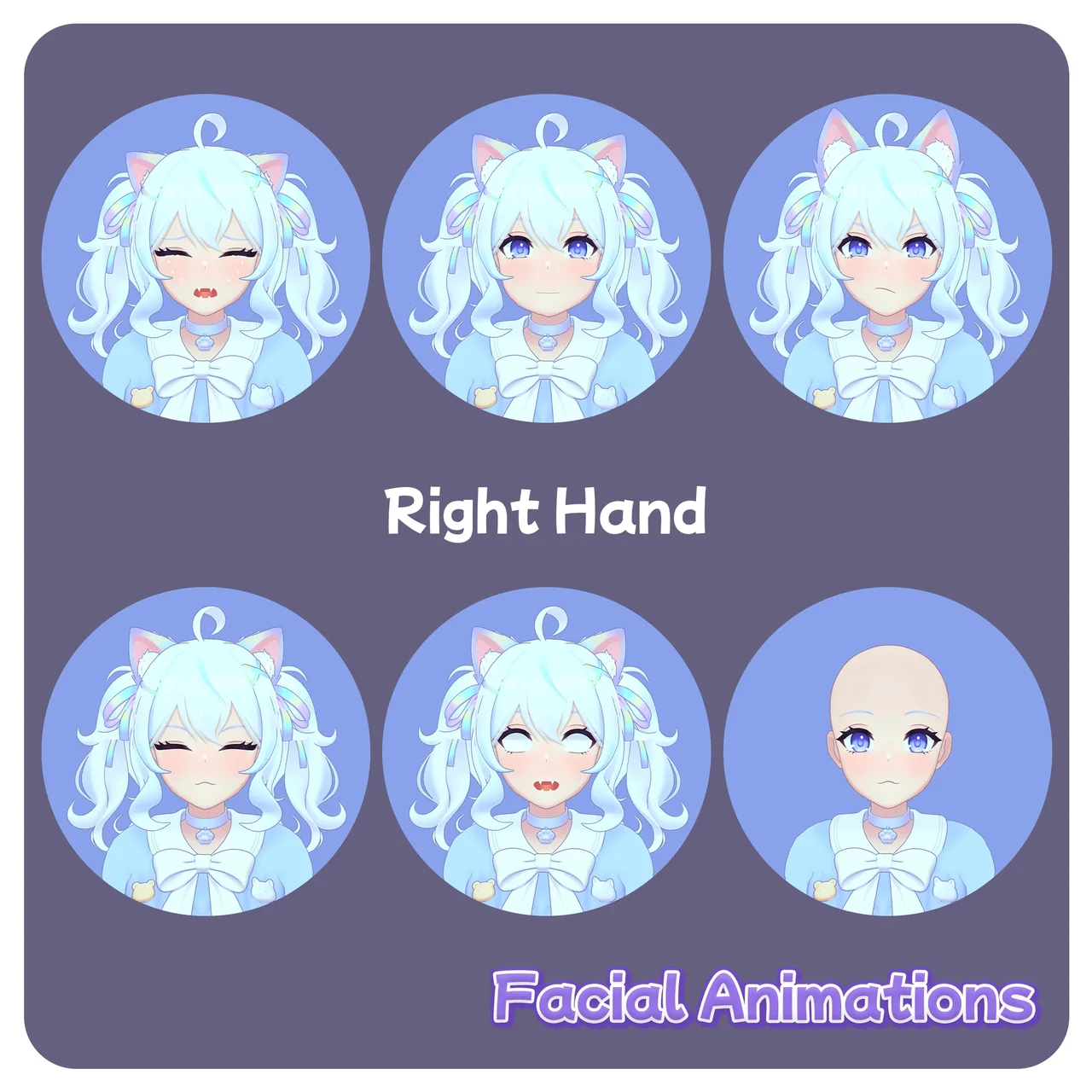
The face is where low and high prices differ most. A basic model blinks and opens its mouth for the five vowels. A full facial system carries the 52 ARKit shapes under their exact names, visemes for lip sync and custom expressions on hotkeys. Artists who sell ARKit as an add-on charge from US$50 to US$250 for it, and custom expressions are often priced one by one, from US$15 each.
ARKit tracking also needs an iPhone or iPad that supports Apple’s face tracking. That device is a cost outside the commission, so check what you own before you pay for the 52 shapes.
For scale, LueLue, a character built around expression, carries 99 working shape keys: the ARKit set, 15 visemes, 18 authored expressions and 14 toggles and controls. Our guide to ARKit 52 blendshapes lists every shape, and what to check before you pay for them.
Toggles and outfits
Every outfit, hairstyle or accessory you can switch on stream is modeled, textured, rigged and tested. Listings price an extra outfit from about US$50–60 at the solo-artist level to US$500 and up. Toggles also multiply testing: each one has to work with the physics and with every expression.
App formats
Each streaming app has its own format and setup: VRM for many apps, .warudo for Warudo, VSFAvatar for VSeeFace. Many artists include one format and charge for the rest; one VGen listing prices each extra format at US$40. Some list setup in a specific app as its own add-on. Tell the artist which app you stream with before you ask for a price.
Rights
Rights are part of the price, not a footnote. Marketplaces such as VGen publish standard usage licences, so check which one a listing uses. Dere★Project’s guide notes that commercial licences commonly add 20 to 30 percent. Some artists include commercial use in every tier, or allow it with no reselling; studios put a full IP transfer at the top of the range. If you monetize streams, sell merchandise or plan brand work, get the licence in writing before you pay.
Timeline and privacy
Published turnarounds run from four to six weeks for a studio’s standard tier, to six to eight weeks for an independent artist, and eight to twelve weeks for the most complex studio tier. A debut date that leaves less time usually costs more. Keeping the model private until your debut is priced too: privacy or NDA fees of US$100 to US$120 appear on public listings.
Your references
Missing information costs money. One artist charges US$500 extra when there is no back or side reference, because someone has to design what you did not show. A front, side and back view of the character, with close-ups of the face and accessories, is the cheapest saving you can make.
Add-ons, priced line by line
Many listings price the extras separately. These are the published figures from the pages above:
| Add-on | Published price | Listed by |
|---|---|---|
| 52 ARKit shapes | +US$50 to +US$250 | MaoMaoAtelier, Yosua’s Carrd page, Ke Mao’s Carrd page |
| Extra app format | +US$40 each | MaoMaoAtelier |
| Custom expression | From +US$15 each | Xoiker, MaoMaoAtelier |
| Extra outfit | +US$50 to +US$500 and up | Xoiker, MaoMaoAtelier, Ke Mao’s Carrd page |
| Privacy until debut | +US$100 to +US$120 | Yosua’s Carrd page, Ke Mao’s Carrd page, MaoMaoAtelier |
| Commercial licence | +20 to 30% | Dere★Project |
| No back or side reference | +US$500 | Ke Mao’s Carrd page |
Add up the lines you need before you compare a base price. Two examples, using the published figures:
- A low base. On MaoMaoAtelier’s listing, the US$100 base plus the 52 ARKit shapes (US$50), two extra formats (US$80), one extra outfit (US$60) and the privacy fee (US$120) comes to US$410, about four times the base.
- A high base. On Ke Mao’s page, the US$3,000 starting price plus ARKit (US$250), one extra outfit (from US$500) and privacy until debut (US$100) comes to at least US$3,850.
The add-ons change the first total far more than the second. That is the pattern to expect: the lower the base, the more of the model is sold line by line.
How to compare two quotes
Put both quotes against the same list:
- The ARKit set: all 52, named exactly as Apple names them. Ask for the shape list.
- Visemes, and how many custom expressions.
- Outfits, hairstyles and toggles, by name.
- Which app formats, and whether the artist sets up and tests the model in your app.
- Physics for hair and clothing.
- Source files: is the original project file included?
- Rights in writing: personal, monetized streaming, merchandise or full transfer.
- Revisions, the support window and the payment schedule.
- Dates, planned back from your debut.
When the lists match, the prices become comparable. When they do not, the cheaper quote is usually the shorter list.
What to send for an exact quote
The more of this you send with the first message, the closer the first number is to the final one:
- Character art with front, side and back views, and close-ups of the face, hands and accessories.
- The color palette, or hex codes.
- The outfits and toggles you want, in order of priority.
- The expressions your audience knows the character for.
- Your tracking setup and the app you stream with.
- Your debut date, if there is one.
- How the character will be used: streams, merchandise or brand work.
Red flags
- “Full face tracking” with no list of the shapes behind it.
- No written rights, or rights that cover only personal use when you stream for income.
- No request for back or side views, and no question about your app.
- A custom model promised in days. Every published turnaround in this guide is measured in weeks.
- Full payment up front with no milestones. Split payments are common; Yosua’s page, for example, asks for 50% up front and 50% on completion.
Rellward pricing
Custom 3D VTuber models from Rellward start at US$ 4,000. That places us at the professional end of the ranges above. Every model carries the full ARKit 52 set under the names tracking apps expect, with visemes and custom expressions on top, and is set up for the app you name in your brief. Usage rights are written into every proposal, from personal streaming to commercial and merchandise use, and we sign an NDA on request.
See what is included on our custom 3D VTuber models page, or start a VTuber brief with your references, your app and your debut date. Building a character for a game instead? Read how much a 3D game character costs.
Sources
Sources: VTubeMe price guide, Xoiker on VGen, MaoMaoAtelier on VGen, Yosua’s Carrd page, Ke Mao’s Carrd page, AnimArts price table, Dere★Project commission guide, VGen standard usage licences.
